Behavioral Analytics Driving Real-Time Adjustments in Gambling Payment Authorizations
Written by Viktor Brooks · Jul 11, 2026
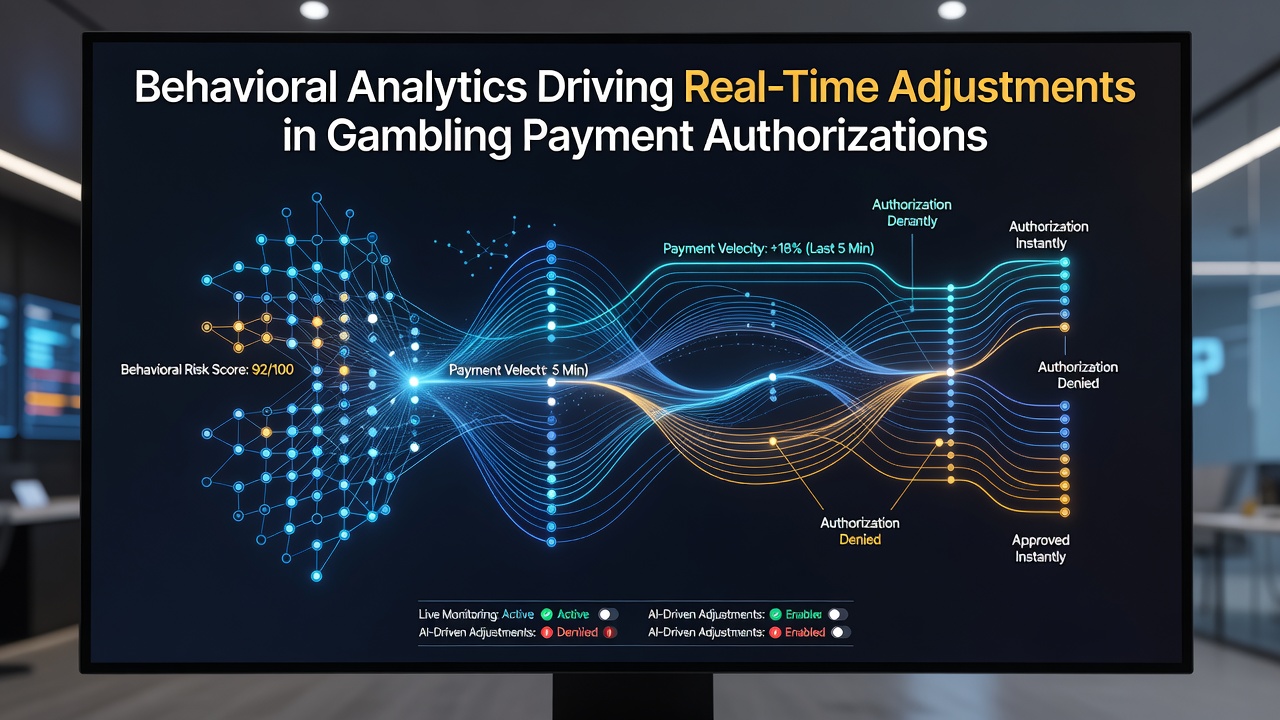
Behavioral Analytics Driving Real-Time Adjustments in Gambling Payment Authorizations
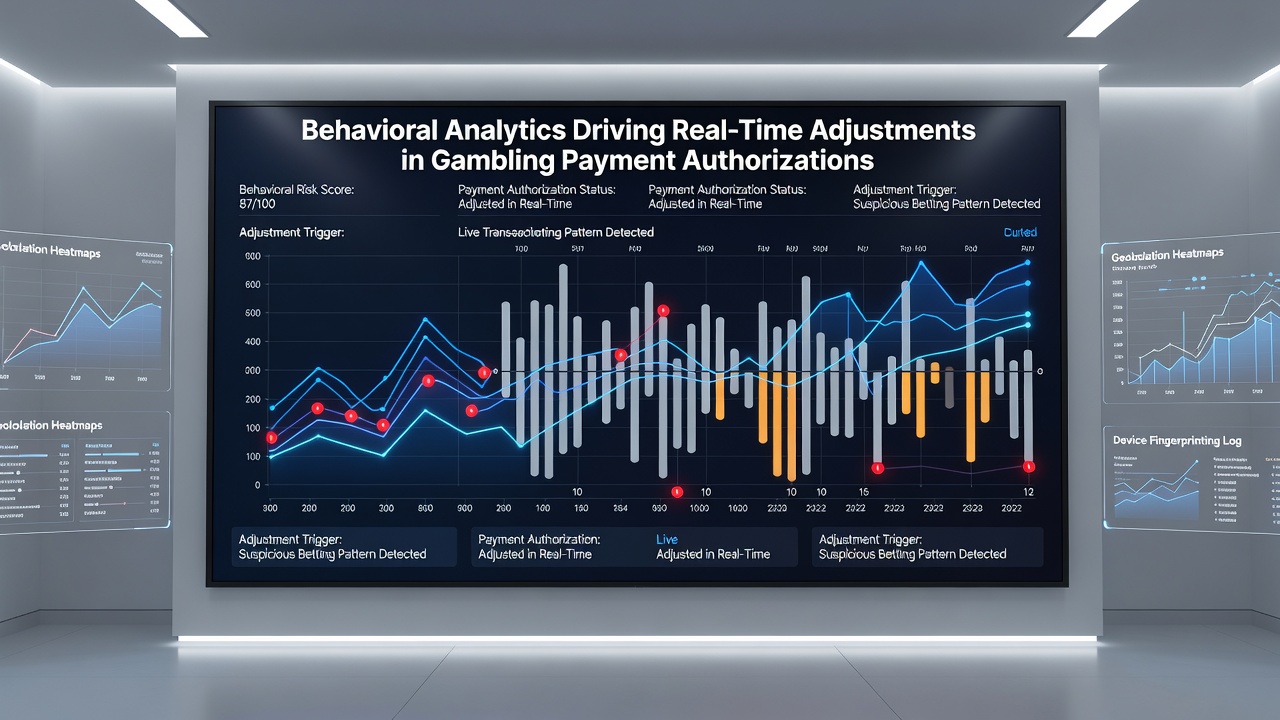
Behavioral analytics now shape authorization decisions across gambling payment systems as platforms monitor player actions to adjust approvals within milliseconds. Systems track sequences of bets, session durations, device fingerprints, and funding patterns while comparing them against established baselines for each account. When deviations appear the authorization engine recalculates risk scores and either permits the transaction, requests additional verification, or declines the request outright.
Core Data Inputs and Pattern Recognition
Operators collect signals from login locations, time-of-day activity, wager sizes relative to historical averages, and velocity of deposits across multiple payment methods. Machine learning models trained on millions of prior transactions identify clusters that correlate with both legitimate play and attempts at account takeover or money laundering. Research from the University of Nevada, Las Vegas indicates these models reach over 94 percent accuracy when layered with real-time behavioral scoring rather than static rule sets alone.
Payment gateways receive continuous feeds from these analytics engines, so a player who suddenly shifts from evening mobile deposits of fifty dollars to midday desktop transfers exceeding two thousand dollars triggers an immediate score recalculation. The system may hold the transaction for secondary authentication or route it through enhanced compliance checks without interrupting the overall flow for verified users.
Integration With Authorization Workflows
Real-time adjustment occurs at the point where the payment processor queries the gaming platform's risk engine before funds move. In July 2026 several major North American operators reported that behavioral flags now account for thirty-eight percent of all authorization changes, up from twenty-two percent the previous year according to data shared by the American Gaming Association. The increase reflects wider adoption of streaming analytics platforms that process events in under one hundred milliseconds.
One documented workflow involves linking behavioral scores directly to payment rail selection. Low-risk sessions route through instant bank transfers while elevated scores divert to slower, more auditable methods such as e-wallets that require manual review. This routing happens automatically and updates the player's profile for future interactions.
Regional Implementation Examples
Canadian provincial regulators require operators to maintain audit logs of behavioral score changes that affect authorization outcomes. Platforms must demonstrate that adjustments remain proportional to detected anomalies and do not create unnecessary barriers for standard play. Similar expectations appear in Australian state licensing conditions where gaming authorities review sample transaction records during compliance audits.
European operators operating under multiple jurisdictions synchronize behavioral models across borders by sharing anonymized pattern libraries while respecting local data protection rules. This synchronization allows a player flagged in one market to carry an adjusted risk profile when accessing services in another, provided consent and legal frameworks permit the transfer.
Technical Architecture Supporting Adjustments
Modern setups rely on event-streaming platforms such as Apache Kafka combined with in-memory databases that hold live behavioral profiles. Each authorization request pulls the current score, applies context-specific weights for factors like recent chargeback history or device changes, and returns a decision code to the payment gateway. Updates to the model occur continuously as new transaction outcomes feed back into training sets.
Observers note that these architectures reduce false positives compared with earlier threshold-based systems. A study released by the Gambling Research Exchange Ontario in early 2026 found that operators using adaptive behavioral scoring experienced a seventeen percent drop in declined legitimate deposits while maintaining equivalent fraud detection rates.
Future Trajectory Through 2026 and Beyond
Industry working groups continue to refine shared taxonomies for behavioral indicators so that different vendors' systems can exchange risk signals without exposing raw player data. Discussions in July 2026 centered on standardizing metadata fields for velocity metrics and device trust scores to ease integration across payment processors. These efforts aim to shorten the time between anomaly detection and authorization response even further.
Conclusion
Behavioral analytics now form an integral layer within gambling payment authorization processes, enabling platforms to modify decisions dynamically based on observed patterns. Data from multiple regulatory regions and research institutions show measurable impacts on both fraud prevention and transaction approval efficiency. As models mature and cross-jurisdictional data standards solidify, real-time adjustments will likely expand in scope while remaining anchored in verifiable transaction outcomes.