Navigating API Latency Thresholds in Multi-Wallet Funding Sequences for Regulated Online Gaming Operations
Written by Yara Wolf · Aug 26, 2026
Navigating API Latency Thresholds in Multi-Wallet Funding Sequences for Regulated Online Gaming Operations
Regulated online gaming platforms rely on precise timing when funds move through several digital wallets before reaching a player account or operator ledger, and API latency thresholds determine whether those sequences complete without triggering compliance flags or transaction failures. Data from industry monitoring tools in August 2026 shows that average response times for wallet-to-wallet calls often hover between 120 and 350 milliseconds in high-volume environments, yet any spike beyond operator-defined limits can halt funding flows mid-sequence.
Core Components of Multi-Wallet Funding Flows
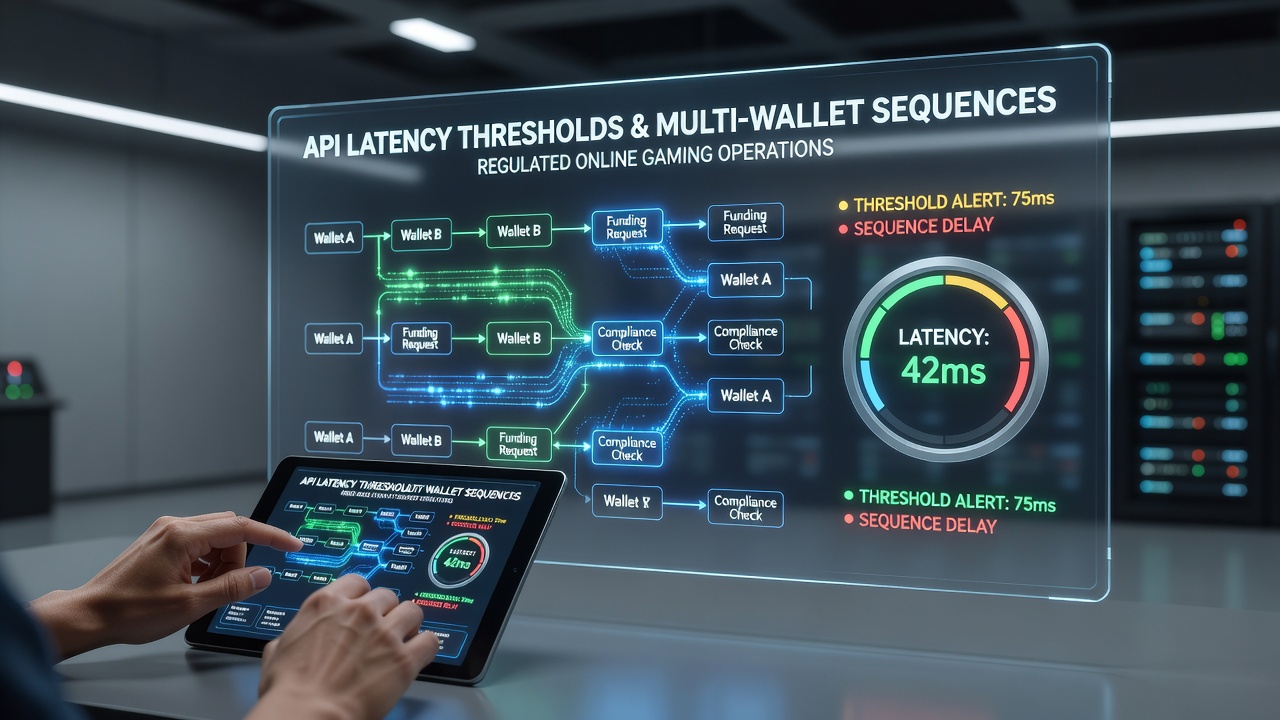
Multi-wallet sequences typically involve an initial deposit from a player's external payment method, followed by routing through an intermediary compliance wallet, then allocation across bonus, main balance, and tax-reserve wallets before final settlement. Each hop depends on API calls that query balance status, apply regulatory checks, and confirm currency conversion rates. Observers note that when one API endpoint exceeds its latency threshold, downstream calls queue up and create cascading delays across the entire sequence.
Research from payment infrastructure providers indicates that sequences involving three or more wallets generate between 8 and 14 separate API requests per transaction. Thresholds are usually set at 250 milliseconds for standard calls and 500 milliseconds for calls that include real-time fraud scoring or sanctions screening. Exceeding these windows forces the system to either retry automatically or flag the transaction for manual review, both of which affect settlement speed.
Regulatory Thresholds and Compliance Mandates
Regulators in multiple jurisdictions require documented maximum response times for funding APIs to protect players from indefinite holds on deposits. In New Jersey, for example, operators must maintain logs showing that 95 percent of funding requests complete within published latency limits, with quarterly reports submitted to the Division of Gaming Enforcement. Similar rules appear in Pennsylvania and Michigan frameworks, where failure to meet thresholds can result in temporary suspension of deposit processing.
European operators follow additional layers under the European Gaming and Betting Association guidelines, which tie latency performance to responsible gaming obligations. When an API call lingers beyond the agreed threshold, platforms must either complete the funding under alternative verification paths or return funds to the source wallet within a defined window, usually 30 seconds. These rules create direct pressure on system architects to monitor and adjust latency tolerances in real time.
Technical Approaches to Threshold Management
Operators deploy several layers of mitigation once latency begins to approach defined ceilings. Load balancers distribute requests across redundant API gateways, while circuit-breaker patterns temporarily reroute traffic away from slow endpoints. Asynchronous processing allows non-critical wallet updates, such as bonus allocation, to occur after the primary funding confirmation returns.
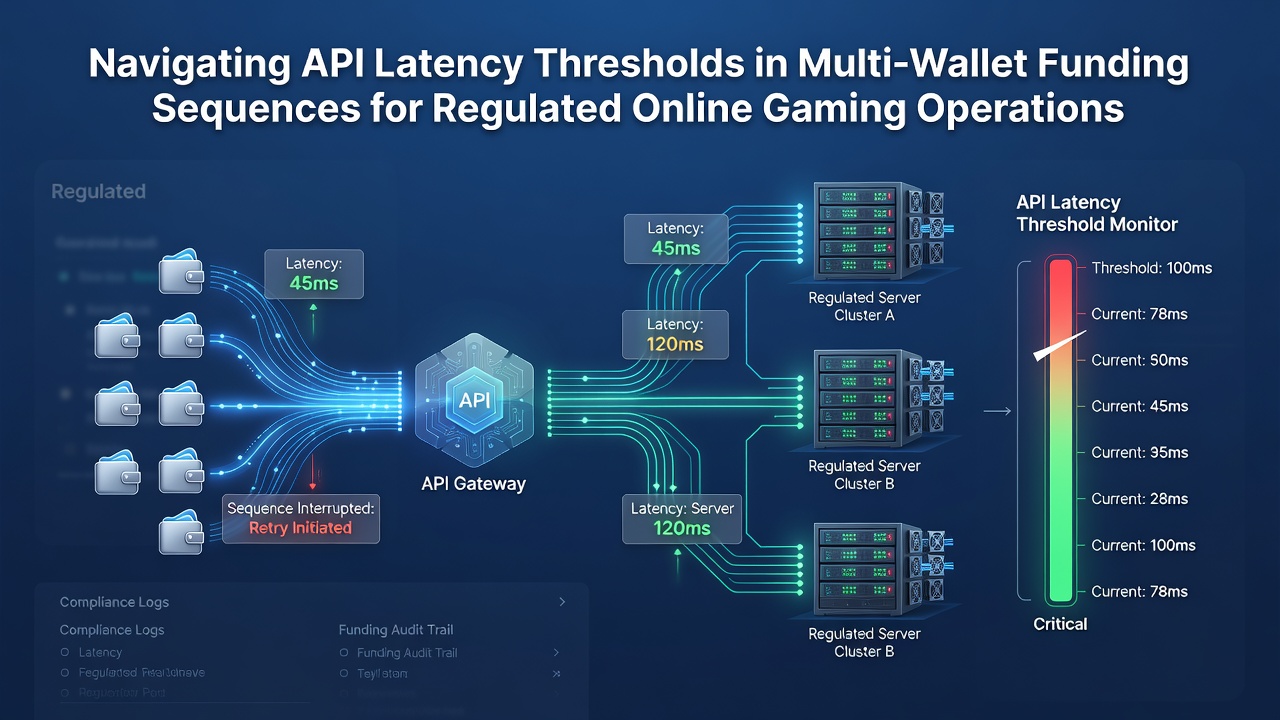
Teams also implement predictive caching for static data like currency rates and wallet status flags, reducing the number of live calls needed during peak hours. Studies published by academic researchers at the University of Nevada, Reno, in early 2026 examined how edge computing nodes placed near major data centers cut average latency by 18 percent in simulated multi-wallet environments. Those findings have prompted several large operators to expand their geographic distribution of verification nodes during August 2026.
Monitoring and Adjustment Practices
Continuous monitoring platforms track every API call across wallet sequences and compare results against both internal thresholds and regulatory benchmarks. When patterns emerge, such as recurring delays during specific time zones or after certain wallet combinations, engineers adjust retry intervals or introduce priority queuing for high-value transactions. One documented case involved an operator that reduced threshold breaches by 40 percent after shifting sanctions screening to a parallel microservice rather than embedding it in the main funding path.
August 2026 saw several platforms publish updated latency dashboards that give compliance officers direct visibility into sequence performance. These dashboards aggregate data from every wallet hop and highlight which endpoints most frequently approach or exceed limits, allowing targeted upgrades instead of broad system overhauls.
Conclusion
Effective navigation of API latency thresholds in multi-wallet funding sequences depends on layered monitoring, adaptive routing, and alignment with jurisdiction-specific reporting requirements. As transaction volumes continue to rise, operators maintain focus on the precise timing of each wallet interaction to keep sequences within both technical and regulatory boundaries.