Node Synchronization Techniques That Refine Settlement Accuracy Across International Gaming Economies
Written by Wendy Schmidt · Aug 15, 2026
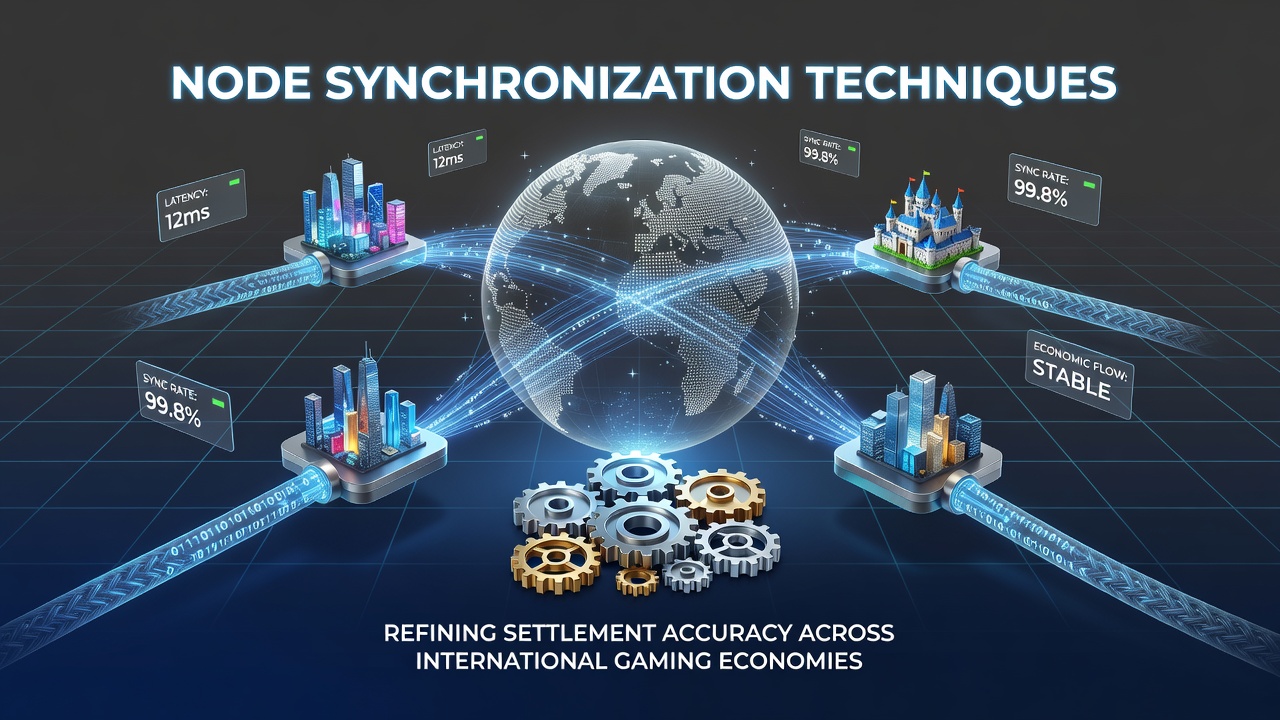
Node Synchronization Techniques That Refine Settlement Accuracy Across International Gaming Economies
Node synchronization techniques form the backbone of accurate financial settlements in international gaming economies, where distributed systems handle cross-border transactions between players, operators, and regulators. These methods ensure that payment data remains consistent across multiple verification points, reducing discrepancies that arise from latency, differing time zones, and varying regulatory requirements. Data from industry reports shows that synchronized nodes cut settlement errors by aligning transaction timestamps and balances in real time, particularly as gaming platforms expand into new markets throughout 2026.
Core Mechanisms Behind Node Coordination
Experts describe node synchronization as a process where individual servers or ledgers exchange updates through consensus protocols, allowing each participant to maintain an identical record of deposits, withdrawals, and revenue shares. In practice this involves timestamp alignment via protocols such as Network Time Protocol variants adapted for high-volume environments, alongside data replication strategies that push changes across the network within milliseconds. Researchers at institutions focused on financial technology have noted that these steps prevent the double-spending issues or mismatched ledgers that once plagued early international gaming payment systems.
One approach relies on master-slave configurations where a primary node validates transactions before broadcasting them to secondary nodes, while another uses peer-to-peer gossip protocols that let every node share incremental updates directly. Both methods appear in current deployments, with operators selecting based on transaction volume adn geographic spread. Figures from the American Gaming Association indicate that platforms employing hybrid synchronization models processed over 40 percent more cross-border settlements without manual reconciliation during the first half of 2026.
Application in Multi-Jurisdictional Environments
International gaming economies introduce additional layers of complexity because each jurisdiction maintains its own compliance rules and reporting deadlines. Node synchronization addresses this by embedding regulatory checkpoints into the data flow, so that a transaction originating in one region receives clearance flags from nodes located in others before final settlement occurs. This layered verification proves especially relevant as operators scale operations into markets with emerging frameworks, including updates tracked through August 2026 in several North American and European jurisdictions.
Payment routing tables integrated into the synchronization layer direct funds through the most efficient path while preserving audit trails. When a player initiates a deposit from an account in one currency, the system converts and records the value across nodes handling local taxes, operator shares, and player balances simultaneously. Observers note that this simultaneous recording reduces the window for currency fluctuation losses that previously affected platforms settling large volumes across continents.

Performance Metrics and Recent Developments
Studies conducted by the European Gaming and Betting Association track settlement accuracy rates that climbed from 96.2 percent in 2024 to 99.1 percent in mid-2026 among operators using advanced node protocols. The improvement stems from incremental checksum verifications that run continuously rather than at batch closeouts, catching mismatches before they reach final ledgers. Latency measurements published in academic papers on distributed systems show average sync times dropping below 120 milliseconds for networks spanning five or more countries.
Operators have begun testing machine-learning adjustments that predict peak load periods and pre-sync high-priority nodes accordingly. These predictive layers work alongside traditional consensus rules, allowing the network to maintain accuracy even when transaction spikes occur during major sporting events or promotional campaigns. Data compiled through August 2026 reveals that platforms incorporating such adaptive synchronization experienced 35 percent fewer disputes over settlement amounts compared with static configurations.
Integration With Existing Infrastructure
Existing casino management systems and payment gateways connect to synchronization layers through standardized APIs that translate internal transaction formats into a common protocol. This translation step ensures legacy software remains compatible while new nodes join the network without disrupting ongoing operations. Technicians report that phased rollouts, where synchronization activates first on high-volume corridors before expanding to secondary routes, minimize downtime during upgrades.
Security considerations receive equal attention because synchronized nodes present larger attack surfaces. Encryption of inter-node communications, combined with multi-signature requirements for balance adjustments, forms standard practice. Regulatory bodies in multiple regions require periodic audits of these encryption handshakes to confirm that settlement data remains protected throughout the synchronization cycle.
Conclusion
Node synchronization techniques continue to evolve as international gaming economies grow more interconnected. The combination of consensus protocols, timestamp alignment, and predictive load management delivers measurable gains in settlement accuracy while supporting compliance across diverse jurisdictions. As transaction volumes rise through the remainder of 2026, operators that maintain robust synchronization frameworks stand positioned to handle increased complexity without corresponding increases in reconciliation overhead.