The Hidden Mechanics of Acquirer Onboarding Timelines for High-Velocity Digital Gaming Merchants
Written by Wendy Schmidt · Jul 29, 2026
The Hidden Mechanics of Acquirer Onboarding Timelines for High-Velocity Digital Gaming Merchants
Acquirer onboarding for high-velocity digital gaming merchants involves layered verification processes that determine how quickly payment processors approve accounts handling rapid transaction volumes, and these timelines often extend beyond initial estimates because of iterative risk evaluations required in the gaming sector. Data from industry reports indicate that standard onboarding spans four to eight weeks for established merchants, yet digital gaming entities frequently encounter extensions when acquirers conduct deeper scrutiny on chargeback patterns and anti-money laundering protocols.
Core Stages in the Onboarding Sequence
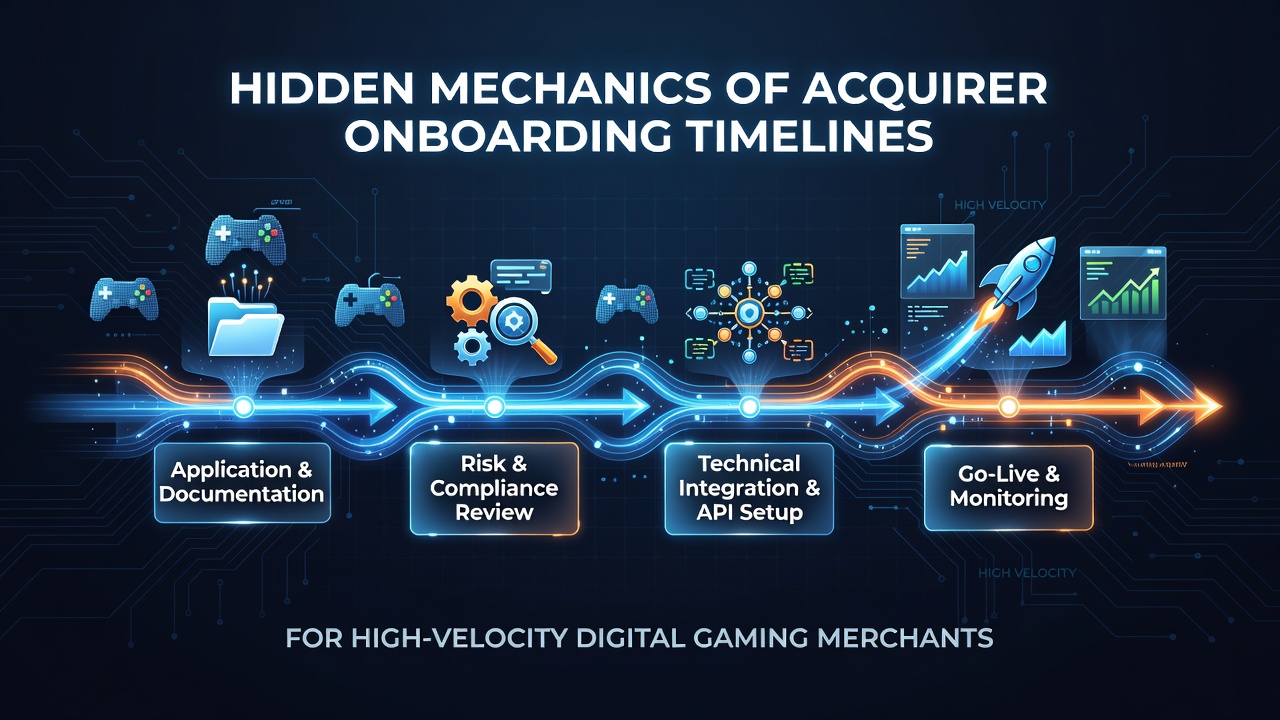
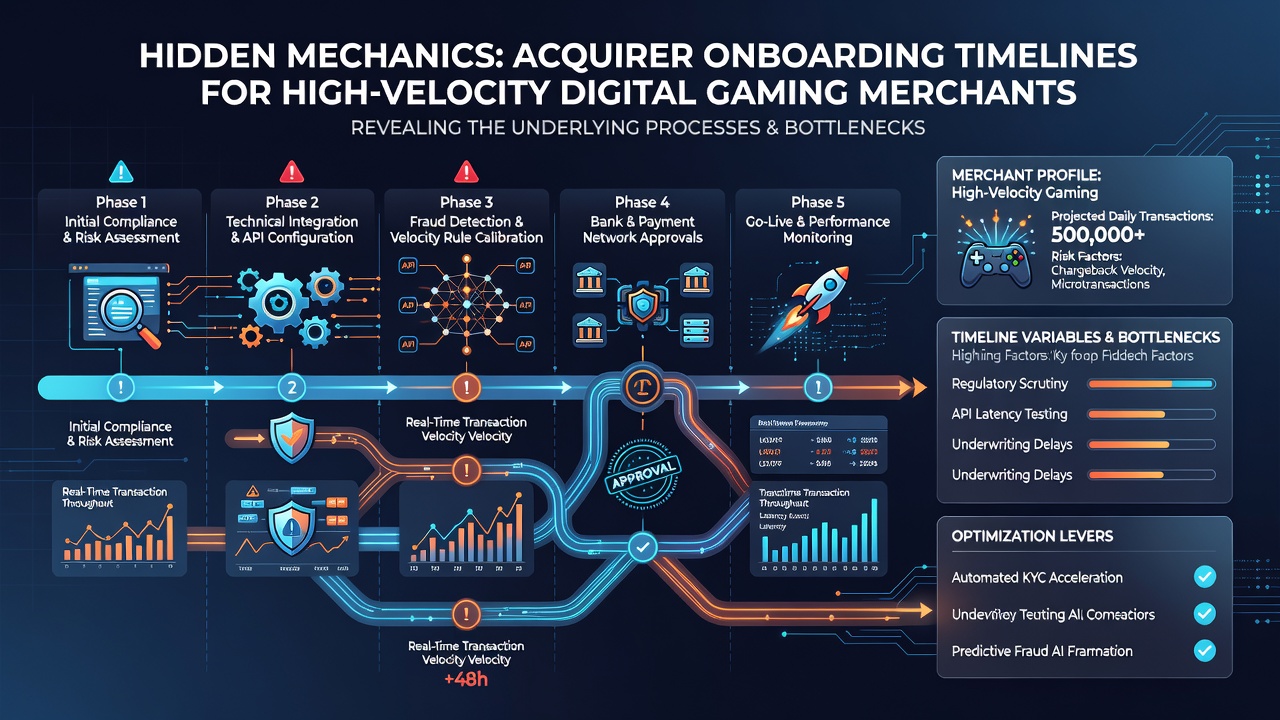
Merchants submit applications that trigger automated screening followed by manual reviews where acquirers assess business models, transaction forecasts, and geographic exposure, and this phase typically consumes the first one to two weeks. Subsequent underwriting examines financial statements, ownership structures, and historical processing data while gaming merchants must demonstrate controls over player fund segregation and payout mechanisms to satisfy acquirer requirements. Integration testing occupies the middle portion of the timeline as technical teams connect payment gateways to acquirer systems and run simulated high-volume scenarios to verify stability under peak loads.
Factors That Extend Timelines
High-velocity operations in digital gaming amplify risk scores because of elevated chargeback ratios and cross-border elements, which prompt acquirers to request supplemental documentation on player verification methods and dispute resolution procedures. Observers note that regulatory updates in mid-2026, including new reporting mandates effective July 2026 from bodies such as the Malta Gaming Authority, have added layers of compliance checks that lengthen approval windows for merchants operating in multiple jurisdictions. Research indicates that incomplete submissions or discrepancies in projected versus actual volume data often restart portions of the review cycle, pushing overall timelines toward ten to twelve weeks in complex cases.
One study revealed that acquirers apply dynamic scoring models that incorporate real-time data feeds from credit bureaus and fraud databases, and these models adjust timelines when anomalies surface during the process. Gaming merchants that maintain detailed audit trails for transaction routing and settlement cycles tend to navigate these checkpoints faster, whereas those with fragmented records face repeated requests for clarification.
Technical adn Compliance Integration Points
Once underwriting clears, merchants configure encryption protocols and multi-tier authentication flows that align with acquirer security standards, and this synchronization step requires coordination between technical teams on both sides. Acquirers often mandate sandbox environments where high-volume deposit and withdrawal simulations run for several days to confirm that systems handle velocity spikes without triggering false positives in fraud detection modules. Data shows that merchants who pre-align their internal ledgers with acquirer settlement cycles reduce friction during this phase, shortening the final approval window by up to two weeks.
According to the American Gaming Association, gaming platforms processing over 10,000 transactions daily encounter additional velocity thresholds that trigger enhanced monitoring periods post-approval, and these thresholds influence how quickly full live processing begins after initial onboarding sign-off. External factors such as third-party vendor audits for payment gateway compatibility also insert variable delays that depend on vendor availability and response times.
Regional Variations and Recent Developments
Timelines differ across regions because European regulators emphasize consumer protection documentation while North American frameworks focus more on financial stability metrics, and July 2026 updates from the Nevada Gaming Control Board introduced streamlined digital submission portals that have modestly accelerated reviews for US-facing merchants. Canadian provincial authorities apply similar layered checks yet coordinate through shared databases that sometimes compress redundant verification steps for repeat applicants. Those who've studied these patterns observe that merchants operating across borders must satisfy the strictest set of requirements from any involved jurisdiction, which extends the overall sequence.
Conclusion
Acquirer onboarding timelines for high-velocity digital gaming merchants reflect a balance between speed to market and comprehensive risk mitigation, with each stage building on data gathered in prior phases to produce final approval decisions. Current figures reveal that proactive preparation around documentation and technical alignment continues to influence how efficiently merchants move through these sequences amid evolving 2026 regulatory landscapes.