Threshold-Based Monitoring Systems and Their Impact on Routing Player Transfers in Casino Payment Infrastructures
Written by Ines Albrecht · Jun 29, 2026
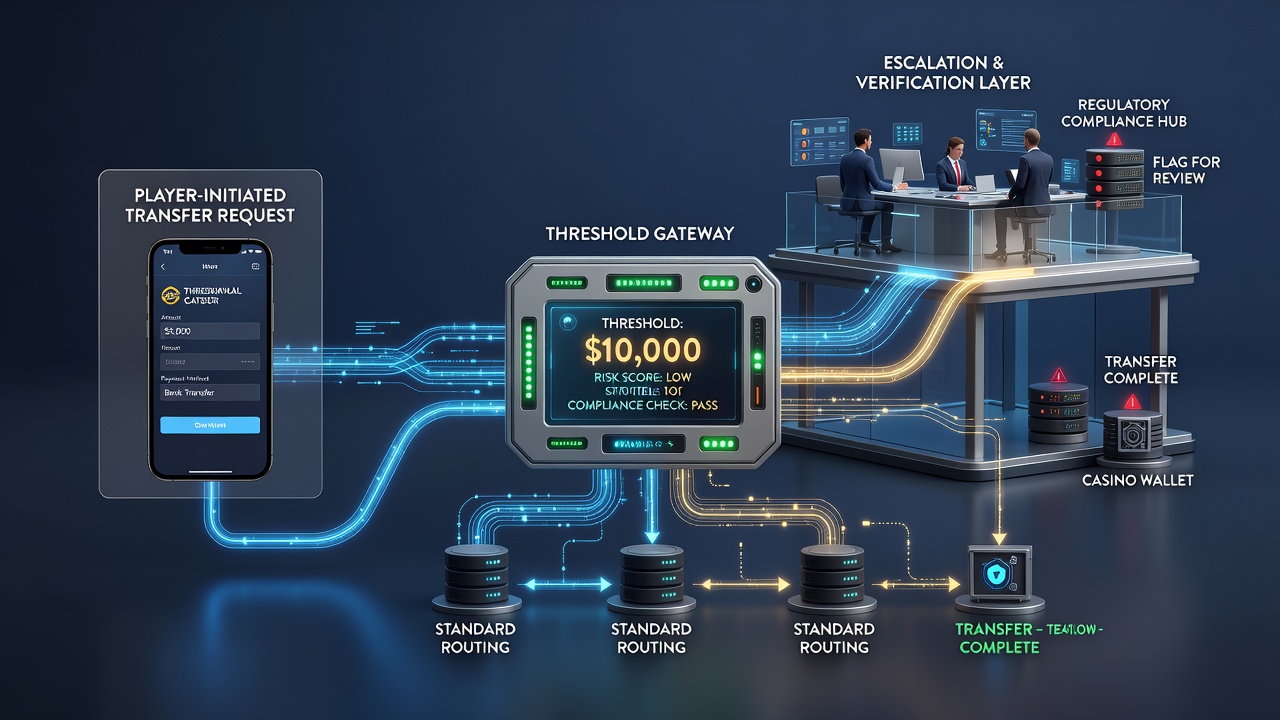
Threshold-Based Monitoring Systems and Their Impact on Routing Player Transfers in Casino Payment Infrastructures
Threshold-based monitoring systems operate as automated checkpoints within casino payment infrastructures where transaction values, frequencies, and patterns trigger specific routing decisions for player-initiated transfers. These systems evaluate deposits and withdrawals against predefined parameters such as amount limits, velocity metrics, and account history before directing funds along approved pathways or into review queues. Data from payment processors indicates that such monitoring reduces unauthorized routing attempts by flagging transfers that exceed daily or monthly thresholds established under anti-money laundering frameworks.
Core Mechanisms of Threshold Detection
Payment platforms integrate threshold detection at multiple nodes along the transaction flow, beginning with initial authorization requests from player wallets. When a transfer approaches or surpasses a set limit, the system activates conditional logic that reroutes the transaction to specialized settlement channels equipped for enhanced verification. Researchers at academic institutions studying financial systems have documented how these nodes connect to backend ledgers, allowing real-time adjustments that prevent high-value movements from proceeding through standard low-oversight routes.
Velocity thresholds track the number of transfers within defined time windows, prompting the infrastructure to shift subsequent activity to alternate processors. This approach ensures compliance with reporting requirements while maintaining operational continuity across fragmented international networks.
Routing Logic Influenced by Threshold Triggers
Once a threshold activates, routing algorithms prioritize pathways based on risk categorization assigned to the player account. Transfers below established limits continue through primary gateways optimized for speed, whereas flagged movements divert to secondary processors that incorporate additional compliance layers. Observers note that this bifurcation occurs within milliseconds, preserving the appearance of seamless processing for compliant activity.
Casino operators configure these rules to align with jurisdictional mandates, resulting in differentiated treatment for transfers originating from various geographic regions. For instance, systems may direct transfers exceeding regional reporting thresholds toward centralized compliance hubs rather than local banking partners.
Integration With Broader Payment Ecosystems
Threshold monitoring connects directly to merchant account configurations and gateway protocols that handle volume spikes common in June 2026 gaming environments. Reports from the Financial Crimes Enforcement Network highlight how these integrations support timely routing adjustments amid fluctuating player activity levels across U.S. markets.
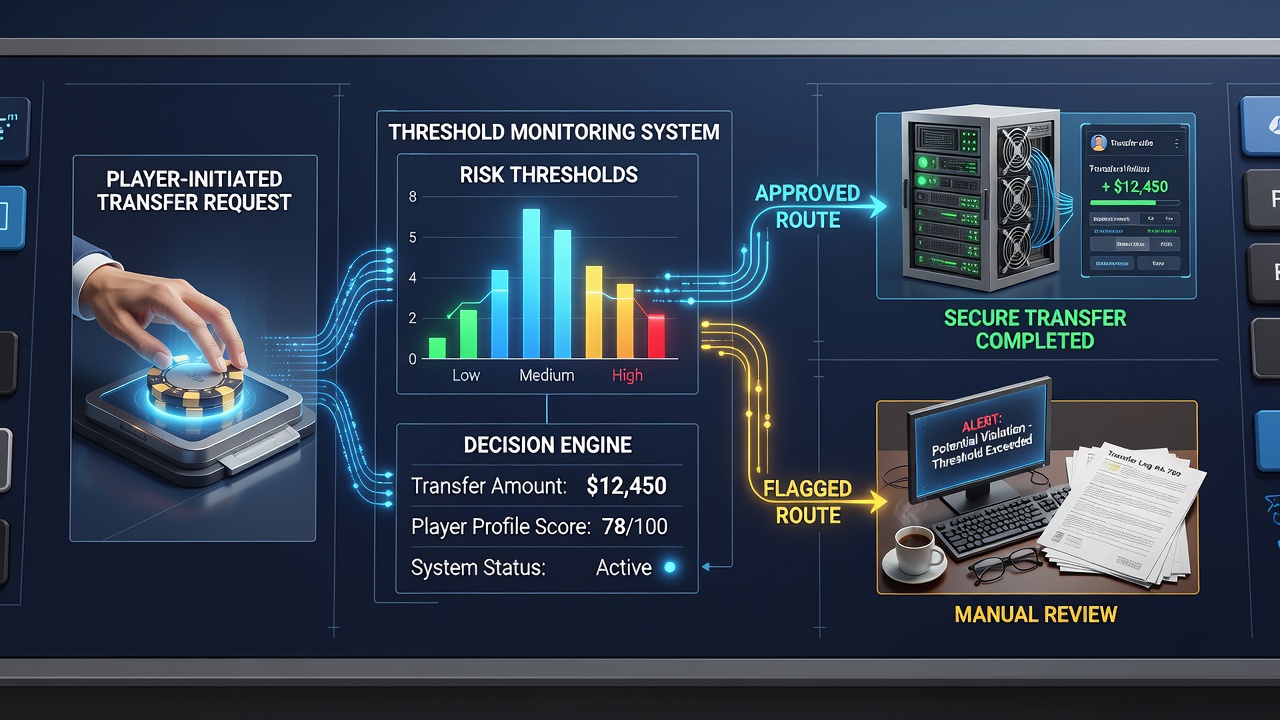
Industry analyses from the Australian Transaction Reports and Analysis Centre show similar patterns where threshold events influence whether funds route through domestic or cross-border channels. The systems maintain audit trails that document each routing decision, enabling post-transaction reviews without interrupting core operations.
Effects on Settlement Timelines and Verification Nodes
Player-initiated transfers routed through threshold-activated paths often encounter extended settlement cycles due to mandatory node synchronization. Multi-tier verification protocols engage automatically when thresholds activate, requiring alignment between risk scoring engines and ledger reconciliation processes. Those who study these infrastructures observe that such routing preserves overall system stability even during periods of elevated transaction density.
Examples from operational deployments illustrate how a single threshold breach can cascade into rerouting across multiple accounts sharing similar behavioral signatures. This coordinated response maintains consistency while adapting to evolving settlement requirements imposed by payment partners.
Conclusion
Threshold-based monitoring systems continue to shape routing decisions within casino payment infrastructures by directing player transfers according to quantifiable parameters and compliance signals. These mechanisms support regulatory alignment across regions while enabling efficient processing for standard activity. As networks evolve through 2026, the interplay between detection thresholds and routing pathways remains central to infrastructure design and operational execution.